
Dubai FinTech Summit 2026: What It Means for the Future of Work
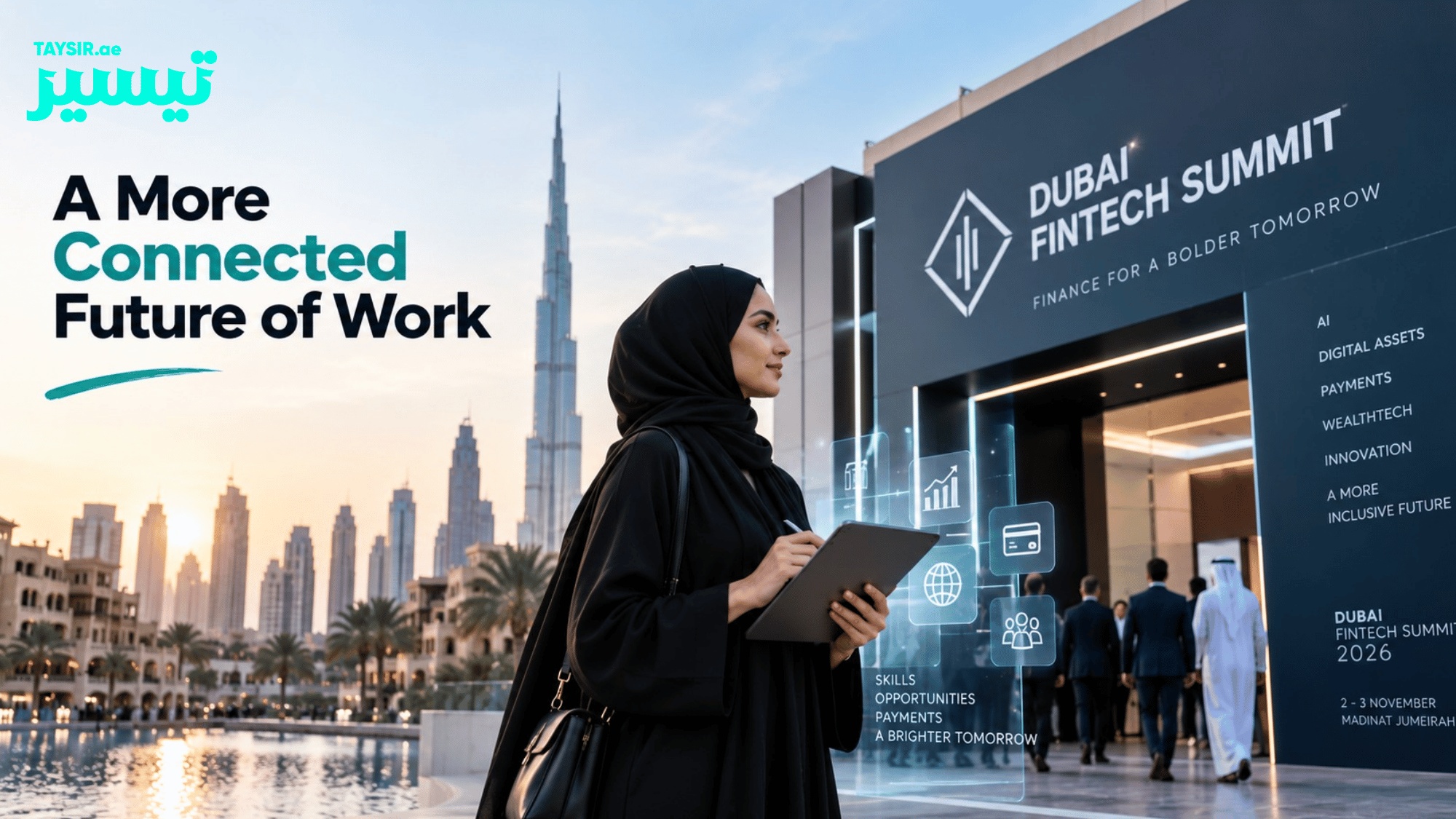
Dubai FinTech Summit 2026 will bring global finance and technology leaders together to discuss AI, digital payments and financial innovation. Here’s why it matters beyond banking.
Dubai is preparing to bring some of the world’s biggest names in finance, technology and investment together again. The Dubai FinTech Summit 2026 will take place on 2 and 3 November at Madinat Jumeirah, forming the anchor event of the inaugural Dubai Future Finance Week.
Organised by Dubai International Financial Centre, the summit is expected to bring together more than 10,000 business leaders, over 1,000 investors and 300+ speakers, with participants coming from markets around the world. But this is not simply another banking conference. The conversations happening there give us a useful preview of how everyday money, business and work may change next.
AI Is Moving Deeper Into Finance
Artificial intelligence is one of the biggest themes on the agenda. Financial institutions are increasingly using AI for customer service, fraud detection, risk analysis, investment research and internal operations. The summit is even exploring the move from traditional chatbots towards AI-powered financial “super-agents” capable of handling more complex financial interactions.
This matters beyond banks.
When major industries start using AI more deeply, the skills expected from employees, entrepreneurs and independent professionals change too. Digital literacy is becoming part of almost every career conversation in the UAE.
Payments Are Becoming More Borderless
Another major focus is the future of payments. The Summit’s current programme covers cross-border finance, digital banking, embedded finance and technologies designed to make financial services easier to access across markets. Its LinkedIn page is currently highlighting cross-border payments, digital assets, AI, WealthTech and next-generation risk among the forces reshaping global finance.
Think about how much has already changed. People now expect to order, book, pay and manage services digitally.
Businesses expect transactions to happen faster. Freelancers and independent workers increasingly operate across digital platforms rather than relying only on traditional employment channels. Finance is becoming part of a wider on-demand economy.
Dubai Wants to Be Where the Next Financial Ideas Are Built
The FinTech Summit also reflects Dubai’s wider ambition to strengthen its position as a global financial and innovation centre.
DIFC passed 10,000 active registered companies during the first half of 2026. Its AI, FinTech and innovation ecosystem reached 1,933 firms, representing 39% year-on-year growth.
Dubai Future Finance Week will expand the conversation even further, with more than 850 speakers across over 85 events, covering FinTech, tokenisation, Islamic finance, private capital, sustainable finance and wealth management. The message is clear: technology and finance are becoming increasingly connected to how businesses are built and how people earn.
What Does This Mean for Everyday Workers?
You do not need to work in a bank to be affected by FinTech. A photographer receiving digital payments, a tutor finding clients online, a delivery provider managing tasks through an app or a tradesperson building a reputation on a marketplace are all participating in the same wider shift. Technology is making it easier to connect demand, skills and payments.
That is also the idea behind Taysir. People across the UAE can post tasks when they need help, while taskers can explore opportunities that match their skills and availability. If you are looking at the changing world of work from the earning side, you can also explore Taysir Earn. The Dubai FinTech Summit is about the future of global finance.
But part of that future is much closer to home: how quickly people can find opportunities, provide a service and get paid for useful work.
Download the Taysir app to explore local opportunities across the UAE.
Finance is becoming more digital. Work is becoming more flexible. The two are increasingly connected.