
Dubai Metro Blue Line: What It Means for Residents
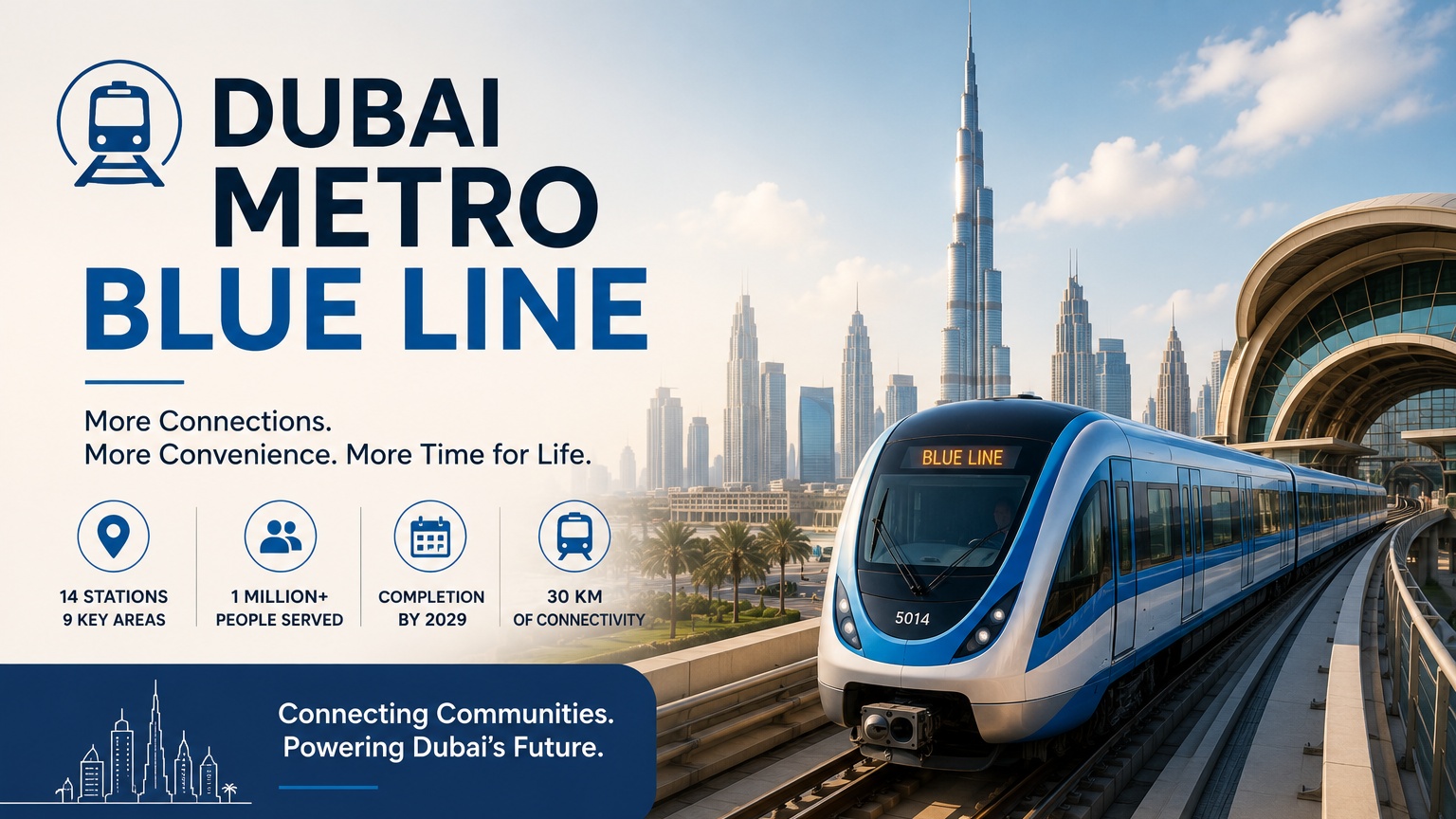
Learn how Dubai Metro Blue Line will improve connectivity, support growing communities and change daily life for residents by 2029.
Dubai’s growth is not only about new buildings. It is also about how easily people can move between where they live, work, study and spend time. That is why the Dubai Metro Blue Line is an important project for residents.
According to Dubai’s Roads and Transport Authority, the Blue Line will be a 30 km route with 14 stations, serving nine areas with an estimated population of more than one million people. Completion is expected in 2029, with progress expected to reach 30% by the end of 2026.
The project is designed to support growing communities and improve access to public transport in areas that are becoming increasingly important to Dubai’s future.
Why the Blue Line Matters
For many residents, daily life depends on travel time. A shorter commute can mean more time with family, more predictable workdays, easier access to universities and less pressure from traffic.
The Blue Line is expected to serve areas including Dubai Silicon Oasis and Dubai Academic City, both of which are important residential, business and education hubs. RTA has also stated that Dubai Academic City is expected to host more than 50,000 university students by 2029.
This means the new route is not only a transport project. It is also a lifestyle project.
When public transport becomes easier to access, communities can become more active, connected and convenient.
A Step Towards the 20-Minute City
- Dubai’s long-term planning also supports the idea of easier access to daily needs.
- The Dubai 2040 Urban Master Plan includes the “20-minute city” concept, where residents can reach essential destinations within around 20 minutes by walking, cycling or public transport. The goal is to improve quality of life by reducing unnecessary travel time and making daily movement more efficient.
- The Blue Line fits into this wider direction.
- Better metro access can help people depend less on long car journeys and make neighbourhoods feel more practical for everyday living.
What This Means for Residents
New metro connectivity can influence where people choose to live, rent, study and work. A community with better public transport may become more attractive for students, young professionals, families and small businesses.
Residents may also find it easier to manage daily routines. Reaching work, university, malls, healthcare, leisure areas and other communities could become more convenient once the line is operational. This kind of connectivity can make a city feel smaller, even as it continues to grow.
Everyday Convenience Still Matters
Better transport makes Dubai easier to move around. But residents still need practical support inside their homes and neighbourhoods.
Moving into a newly connected community may involve cleaning, furniture assembly, deliveries, handyman work, packing, unpacking or setting up a new apartment.
That is where Taysir can help. Residents can post tasks, compare offers from local taskers and arrange help for everyday services while they focus on settling into their community.
Connected Living Needs Local Support
The Dubai Metro Blue Line will help connect people to more parts of the city.
Taysir helps connect people to practical support around them.
As Dubai becomes more connected, everyday services should also become easier to access. Whether someone is moving near a future metro station, preparing a new home or managing daily tasks, posting a task on Taysir can help residents save time and get things done more efficiently.